Spiritual Literacy
By learning the Spirit of God and understanding it, you may grow into the principle of revelation. –Joseph Smith
Just as learning an instrument is a process, learning the language of the Spirit is a process. –Linda K. Burton
John Steinbeck wrote that “learning to read is probably the most difficult and revolutionary thing that happens to the human brain.” For me, learning to interpret the language of the Spirit has been just as challenging and transformative to my soul.
Over the last couple of decades, I have seen many friends and family members leave the LDS Church, including a sister and two of my own children. During that time, I had my own faith crisis, so I’m definitely in no position to judge anyone. Faith journeys are personal, and no two journeys are the same. Through my journey, I have learned to trust my spiritual impressions, but following the Spirit is a process that I am still trying to master. My journey has not always been the straight one described by Lehi, holding on to the metaphorical iron rod. In many ways, my path seemed unlikely to end with full-fledged Church activity.
In my childhood home, religion was like fine silverware—brought out and used only on special occasions, then polished and put away. My family would show our faces sporadically at Sunday meetings, but just as often worshipped in the mountains, at amusement parks, or on golf courses.
Some Sundays, while my friends were at church, I would follow my father on the local amateur golf circuit. One Easter morning, the family piled into the rear-facing seat of our navy blue station wagon, Easter baskets in tow. Free from the watchful eyes of Mom and Dad, my sisters and I gorged ourselves on jelly beans, malt balls, and chocolate eggs. We were off to Price, UT, to watch my dad compete in the Black Diamond Open golf tournament. I felt no guilt for missing Easter services at my home ward. We were having fun as a family, and I just hoped my dad played well enough to get us a prize from the pro shop.
If it wasn’t golf, or hiking, or picnics on Sunday, it was my father organizing a Sunday afternoon baseball game at the local high school ball field, much to the delight of neighborhood kids, and much to the chagrin of stricter Sabbath observers. We were clearly casual Christians who enjoyed the sociality of church membership in a ward with its movie nights, children’s carnivals, road shows, pioneer day celebrations, and ward basketball. No one in the family seemed to take the Gospel too seriously.
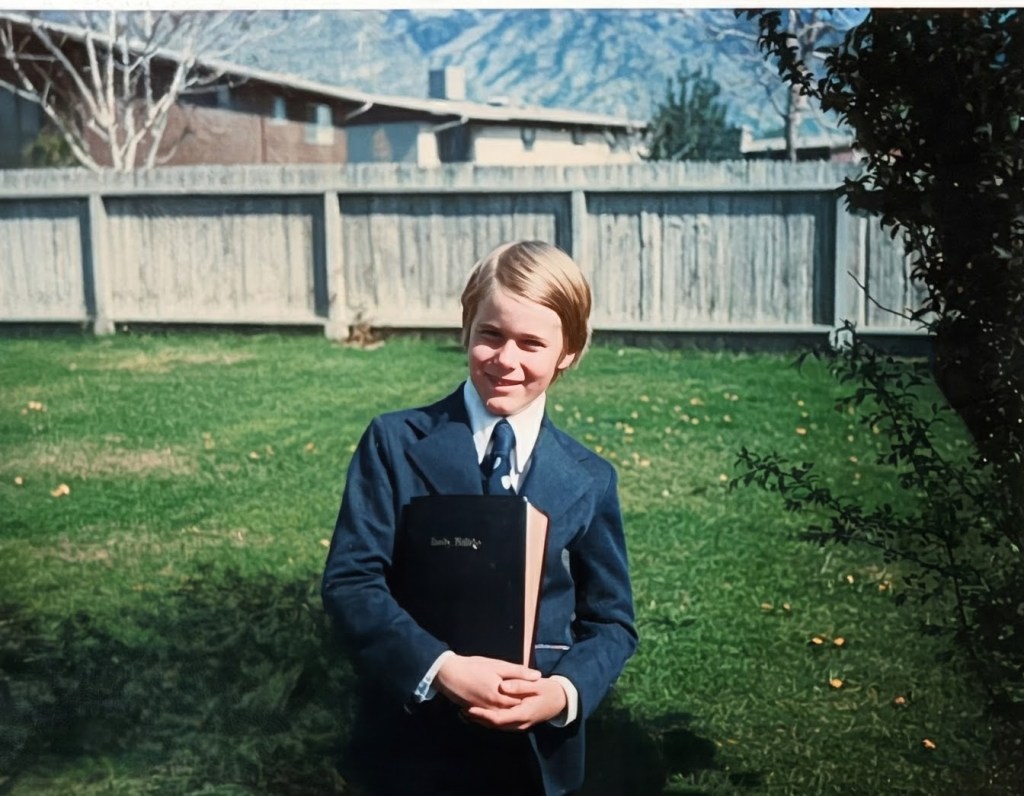
I have no memory of my parents teaching me to pray or read scriptures, though it may have happened. My only memory of scriptures was buying a Bible after my baptism — my name stamped in gold on the cover. The temple was rarely mentioned, perhaps because it was a sore spot for my father. My parents had been married civilly in a courthouse in Reno, Nevada, not a temple like many of my friends’ parents. My dad always said he had wanted a “temple marriage” with my mom, but she had never been interested. We attempted the occasional family home evening lesson, half-heartedly, but my parents largely left our religious education to Primary and Sunday School teachers. Still, my early childhood was a happy one. I learned more about unconditional Christlike love from my parents than I could have in any class. They would have sacrificed anything for their children.
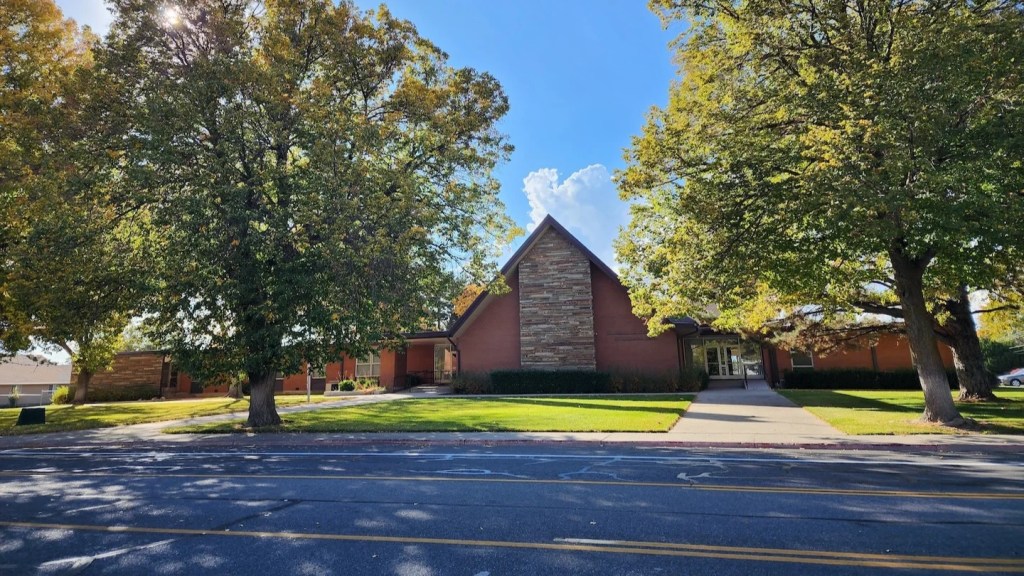
What I remember most from junior Sunday School and Primary is the music. Sister Shari Schauerhammer instilled in me a love of spiritual music that still lives to this day. I was one of the most enthusiastic singers in Primary, so much so that Sister Schauerhammer convinced my best friend Ben and me to sing “As I Have Loved You” in Sacrament Meeting. We brought our mothers to tears that day, which was ironic since we were two of the biggest troublemakers in Primary.
Ben and I were so disruptive that Primary leaders considered splitting our one class into two. Our antics even drove Carol Miller, our primary teacher and Cub Scout leader, to quit. One day, she just walked out of our Primary class, never to return. This was particularly embarrassing to my mom because Carol was our next-door neighbor. I still feel a pang of guilt and apologize every time I see her.
Religion never mattered much to me until age 11, when my parents got divorced. After the divorce, my parents had a split custody arrangement, but my mom had lost interest in the church, so I began attending church across town in my Dad’s ward. Within months of the divorce, my mom’s new boyfriend moved in, and Bishop Buckwalter initiated church discipline proceedings for my mom. I remember seeing several official communications from the bishop around the house, all of which my mom ignored. Within a few months, my mom had officially exited the church, though it did little to change the way I viewed her. I have never met a more tender-hearted person in my life. She never spoke ill of the church nor discouraged mine or my younger sister Robin’s attendance. There was no animosity toward the Church–I just don’t think she had ever developed a testimony. My two older half-sisters followed her lead and never returned.
After the divorce, my dad became more focused on the Gospel than he had ever been before. I think he felt responsible for our spiritual upbringing and took us to Church nearly every Sunday —plus, there was the bonus of getting us a little extra time every week. My father’s devotion to the Gospel continued to ebb and flow. As a young man, he had turned down an offer to serve a mission after enlisting in the Navy during the Korean War, but he still took great pride in his church membership as a serviceman. For example, he was a fierce proponent of the Word of Wisdom until the day he died, never letting alcohol, tobacco, tea, or coffee touch his lips. Dad never really studied the gospel in any depth. He was not much of a reader, but he would still find inspiration in general conference talks, which he would buy on audio cassettes. His favorite speakers were Thomas S. Monson, Bruce R. McConkie, Paul Dunn, and LeGrand Richards. Yet his loyalty had its limits. When asked by Marvin J Ashton, a future Apostle, to abandon Sunday golf to be eligible for the All-Church Golf Tournament, my dad said, “No, thank you,” and continued to play golf on Sunday.
Robin and I attended church with my father in a ward of apartment complexes and a few old, modest homes. Many in the ward referred to it as a “newlywed and nearly dead’ ward. Unlike my previous ward, the youth organization was very small. I was ordained a deacon and quickly noticed how different things were in this ward. Our deacon’s quorum president, Marcus, had apparently been given this calling for his own spiritual growth — an opportunity he didn’t want. He rarely showed up at church, and I remember the quorum going to his home to drag him to church more than once.
I was also not impressed with my Deacon’s Quorum advisor, a tall red-haired man named Brother Gappmeyer. He was humorless, talked over our heads, and rarely came prepared for Deacon’s Quorum meetings. However, I was impressed with my bishop, Mark Nixon.
It was a special treat when Bishop Nixon visited our quorum. Bishop Nixon carried his calling with dignity and had a way of speaking to us at our level. His words spoke to our hearts, and the normally noisy deacons noticed it. The room would go quiet when he addressed us. Though we were little punk 12-year-olds, he treated us like the young adults he wanted us to become. I remember him telling us that the number one thing we should be preparing for was serving a full-time mission. In many ways, it was nice to have a fresh start in a new ward without the baggage of my parents’ divorce hanging over me. With such a small number of young men, I felt needed and appreciated.
I trace the beginnings of my spiritual understanding and testimony to two temple trips I took as a young man. The first was a trip to the Provo Temple to do proxy baptisms. I had always admired the beauty of temple exteriors, lighting the night sky across the valley, but wondered at the mysterious activities inside. When our ward planned a youth temple trip to the Provo Temple, I was left to wonder no longer. I remember the long walk up the steps on the temple grounds, passing by fountains and carefully maintained flower beds. I felt eager to see what would be revealed.
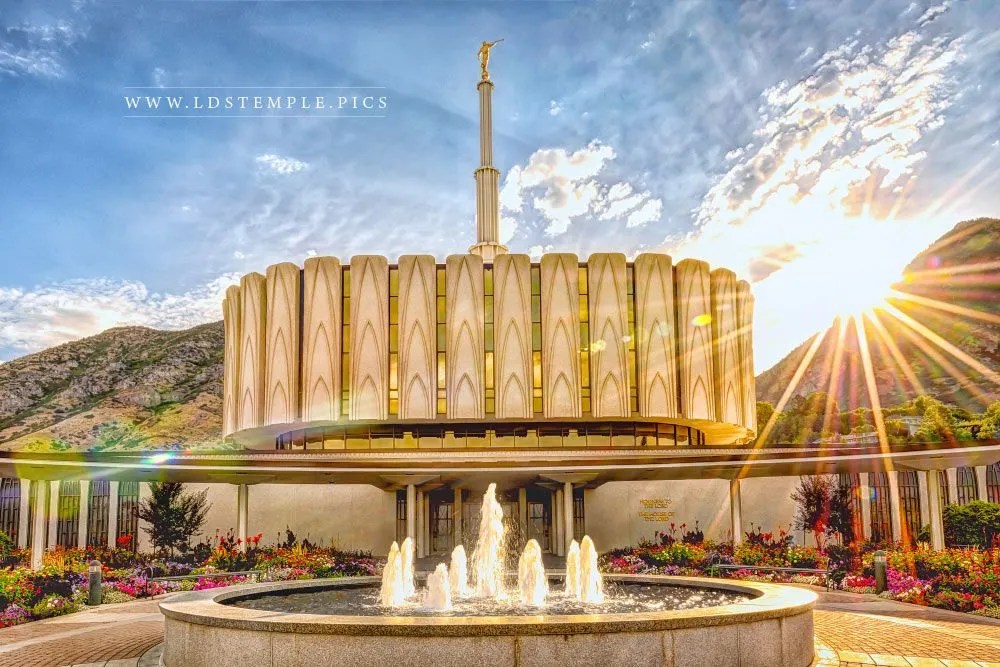
When I approached the reflective gold-trimmed sliding doors, I felt like Charlie entering Wonka’s chocolate factory. We entered the temple doors, turned left, and walked down the marble steps to the baptistry. We all changed into identical white jumpsuits, then slid into the blue cushioned pews beside the font, waiting for our turn to perform baptisms. Not a word was spoken by our youth group as we watched each youth in turn get baptized. I felt a calm wash over me, and my worries evaporated in that holy space.
I also began pondering my ancestors for the first time, and sensed that those who had gone on before me were not as far away as I had once imagined. The veil of death separating us from our loved ones seemed very thin, and I sensed that the work we were doing was pleasing to the Lord.
The second sacred experience was from a youth conference in southern Utah. This was my first trip away from home without my parents. I looked forward to heading to sunny St. George, but my main motivation for going was a girl in my ward who caught my eye. Kamie, two years my senior, was both pretty and spiritually serious. I would have gone anywhere to keep up with her. As part of our trip, our group piled into a minivan and drove through Zion National Park. It was late spring, and a surprise snow flurry swirled around us outside. Our leaders, Bob and Laurel Meyers, spoke with us about staying faithful to the gospel despite life’s storms. They spoke of virtue and how much happier they were that they had “saved themselves” for each other. It made an impression. I decided I wanted to be married in the temple too.

On the last day of the conference, we performed proxy baptisms in the St. George Temple. Again, I felt personal peace in the temple. After finishing the baptisms, we received a little note from a temple worker in the baptistry reminding us that those for whom we performed these ordinances would someday “rise to bless us.” Later that night, the youth and leaders gathered in a corner of the temple grounds for a testimony meeting.
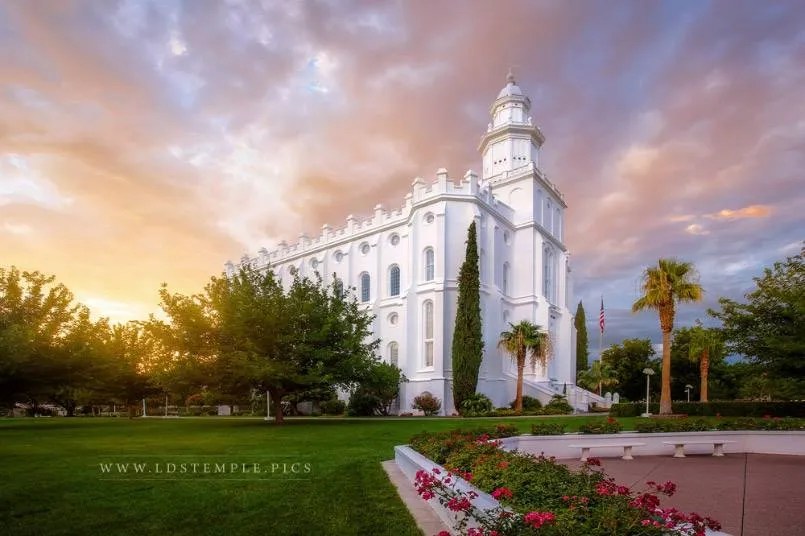
Each testimony that evening revealed a vulnerability I had never seen in my ward friends. Our youth were a ragtag group. Many of us didn’t have ideal family lives and weren’t blessed with financial abundance. I was moved as the kids spoke from their hearts about their hopes, dreams, and desires for the gospel to help direct their lives. I looked at the flowers, the manicured green lawns, and the glowing white sandstone of the St. George Temple against the night sky. At that moment, I wanted with all my heart to commit myself to the Gospel of Jesus Christ. I sensed, even as a young man, that this was the path that would bring me happiness.
I hadn’t planned on saying anything that night, but I felt compelled by the Spirit to speak the thoughts that had been swirling in my head. Up until the youth conference, my life hadn’t felt all that hopeful. There had been a lot of upheaval since the divorce. My parents bickered frequently, and I was often forced to mediate to help keep the peace. On top of that, I had been abandoned by my best friend, left my childhood ward, and was forced to live in two different homes, switching homes every week. I had to adapt to my father’s economic instability and the new men coming into my mother’s life, all while navigating junior high and the onset of puberty. The Gospel was the only stable force in my life. I don’t know what I said that night, but my body was filled with light and strength, and I felt God’s approval. I learned that what Elder Packer had said about testimonies was true, that a “testimony [was] found in the bearing of it.” After my first public testimony, I wanted to share my feelings about the Gospel more frequently. I could see myself becoming the missionary that Bishop Nixon had challenged me to become. As a teen, I became a regular at the pulpit for fast and testimony meetings. I followed Paul’s mantra, “I am not ashamed of the Gospel of Christ.”
Those two spiritual experiences, both involving temples, were touchstones in my early spiritual growth. Ever since that time, temples have been spiritual homes for me. Whether it has been completing temple ordinances, walking the temple grounds, landscaping, or cleaning the temple, I have always found calm in the storm there. There I find answers for where I came from, why I am here, and where I am going.
As I entered my later teenage years, I learned to trust my spiritual thoughts and feelings more and more. Sometimes they came as a gut feeling, sometimes as flashes of ideas or thoughts, and sometimes as a sense of calm or comfort. Occasionally, I would get one of those goosebump moments when an overwhelming sensation came over me. Alma’s word-and-seed experiment in Alma 32 has always made sense to me. When I judged whether something I read, heard, saw, or felt was a “good seed,” it was because “it enlarge[d] my soul…enlighten[ed] my understanding, [or]… it beg[an] to be delicious to me.”
I credit my high school seminary teachers and my young men’s leaders for keeping my faith alive during high school. One particular young men’s leader, David Sorensen, was influential. Dave and his wife, Martha, were both humble and spiritual, with a wonderful sense of humor. They showed me the gospel in action as they served and shared their love for each other. They made the gospel real to me. From them, I learned that sometimes our strongest spiritual declarations are the lives we lead. My transient ward continued to struggle with holding onto youth, and I saw many friends come and go. At one time, I was the only teacher in the teacher’s quorum. But no matter — I continued to be nurtured by leaders like Dave, and continued to find my home in the Church.
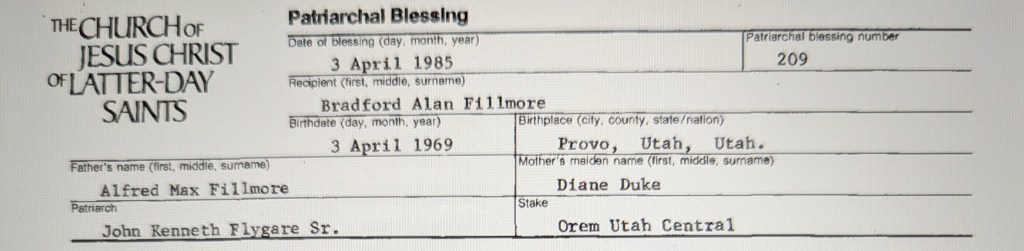
At 16, I decided I was hungry for more spiritual direction in my life and contacted the bishop about my patriarchal blessing. On the morning of April 3, 1985, my 16th birthday, my father and I entered the humble home of our stake patriarch, Kenneth Flygare. I had never met the man, but he laid his hands upon my head and spoke to me like he had known me my whole life. The words spoken that day have been a personal guide to me throughout my life. The words of the blessing search into my past: “In the premortal life, you were a devoted servant of the Lord Jesus Christ in promulgating the great plan of salvation.” The words guide my present: “Regret and fear are twin thieves that rob us of today’s joy.” The words of the blessing also make promises for my future that I have seen fulfilled: “You will have assignments, especially among the young people. You will be able to assist many in overcoming the ills of living.”
Other experiences built my faith and reminded me that God was aware of me. In the spring of my junior year of high school, I received a phone call from Bro. Washburn, a church regional representative. He asked me to come in for an interview at the seminary building at 7 am the next day. I wondered what this was all about. Bro. Washburn interviewed me and asked me to be the president of the high school seminary for my senior year. There were 1200 kids in the seminary at our high school, and I considered almost all of them more spiritually capable than I. Though active in the church, I came from a broken home. One week I lived with a father who sometimes took the Gospel rather casually, and the next week I lived with a mother who had left the Church and an alcoholic, chain-smoking step-father. Both homes were filled with love, but neither had much Gospel focus. From outside appearances, I seemed a less than ideal candidate to lead the seminary. Why choose me?
I left the meeting baffled yet filled with the spiritual sense that God was aware of me as an individual and that anything was possible. As I walked home, I had the clear impression that God knew me. It was as if He was saying, “Brad, I see you.” He knew my name. He knew my desire to serve him, and I felt I had been called from the least likely of families.
After high school, I enrolled at BYU for one year. Then, I knew it was time to give back to the Savior. I turned in my mission papers in the spring of 1988 and was called to serve in the Pennsylvania, Pittsburgh Mission. It was something I had desired ever since I was a deacon at the feet of Bishop Nixon, and now it was time to share my testimony with the people of Pennsylvania.
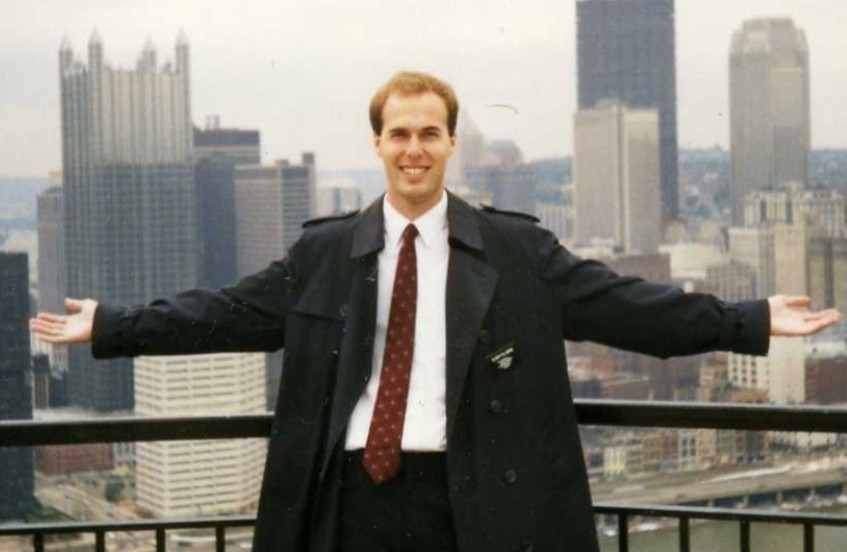
Becoming a missionary was a difficult transition. As an introvert and the first missionary from my family, leaving home for the first time was exciting but also unsettling. Waiting for my first companion, Elder Allred, in the parking lot at Green Tree Chapel in a suburb of Pittsburgh, Pennsylvania, dripping with a humid July sweat, I wondered what I had gotten myself into. I felt confident in my testimony and my knowledge of the gospel, but I was already homesick. I knew my mission would require complete dependence on the Lord. In time, I grew to love everything about my mission: my companions, the people of Pennsylvania, New York, Ohio, and West Virginia, and the geography as well. I learned to follow the Spirit in every aspect of missionary life. I couldn’t have survived without it.
One of the greatest lessons I learned is that the LDS Church did not have a corner on spirituality. In my first area, Uniontown, Pennsylvania, we befriended a Catholic priest named Father Brushka. Most of his parishioners were of Polish descent. They were very kind to us, inviting us to their social gatherings and frequently feeding us. The Father was one of the most spiritual men I had ever met. He suffered from Bell’s palsy. In one quiet moment, we had a conversation about the priesthood, and my companion boldly asked if he would like a blessing. He said that he would like that. I never dreamed that as a young missionary, I would be anointing and laying my hands on the head of a Catholic priest.
My mission shaped me in ways I can’t fully capture here; what I can say is that I never felt alone. I truly felt the hand of heaven in my daily mission affairs. The members, investigators, and companions were living angels to me. When Jesus said, “For whosoever will save his life shall lose it: but whosoever will lose his life for my sake and the gospel’s, the same shall save it,” I understood what He meant. I sobbed the day I said goodbye to the dear people of my mission, but I looked forward to reuniting with my family. While I was serving in Pennsylvania, a very special bishop and home teachers back in Utah had been working at getting my mom involved in the Church again. I had often heard that serving a mission would bless your family at home. Imagine my excitement when receiving news that Mom was attending Church again. I had performed baptisms on my mission, but I never dreamed that I would get to rebaptize my own mom when I came back to Utah.
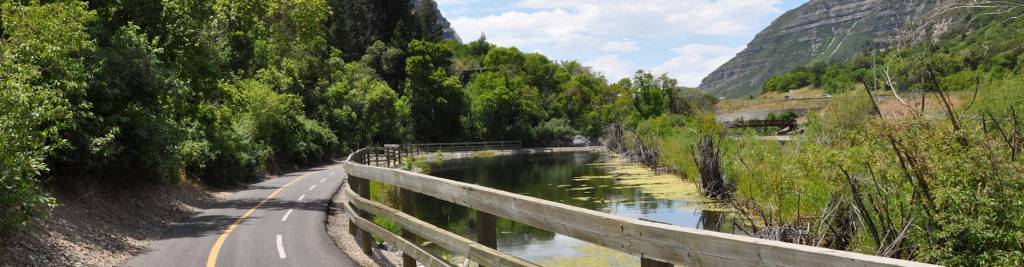
I returned from my mission full of faith and confidence. However, life has a way of humbling us all. Despite my mission president’s encouragement not to delay marriage, I dated for 9 years before meeting my wife. There were times that I felt that God had forgotten me, that finding the right person to marry would never happen. I used to take long walks and have conversations with God. On one walk along the Provo River Trail, I expressed frustration at being lonely and never finding the right girl. I said aloud to God, “Do You even understand what I am going through?” A spiritual assurance immediately filled my body. God clearly told me that he was listening. It was only a few months later that I met my wife Melanie.
As a married adult, I’ve had to adjust to how my wife experiences the Spirit. Her inspiration often comes in dramatic bursts with more regularity and clarity. It is not unusual for her to come home from the temple and say, “This is what we need to do…” I’m grateful for a companion who seeks spiritual guidance and is committed to the Gospel. While faith comes naturally to Melanie and her family, I’m a natural skeptic, perhaps shaped by my background and training as an English teacher, as well as an unstable family life. While I have both faith and testimony, it takes me longer to sort through spiritual thoughts and feelings.
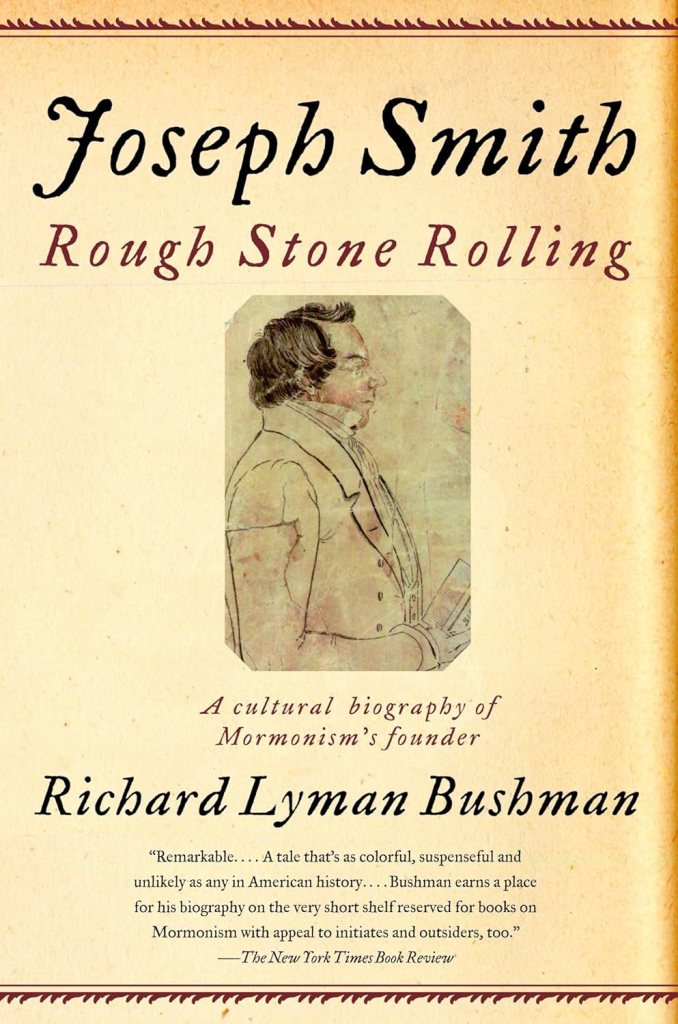
Then everything I thought I knew about the Spirit and about the Church changed in the early 2010s. It started when I read Richard Bushman’s biography of Joseph Smith, Joseph Smith: Rough Stone Rolling. Like many members of the church at this time, I began learning new historical details surrounding the Book of Mormon translation, polygamy, the First Vision, Blacks and the priesthood, and priesthood ordination. This new knowledge took a sledgehammer to the foundation of my testimony. This was not the same narrative that I had been taught in seminary, priesthood, and Sunday School. I felt I had been betrayed by the Church to which I had been loyal. For years, I had felt the Spirit confirming that the Church was true. I was terrified. I didn’t know where to turn. Was the foundational narrative that I had lived by and testified of on my mission a lie?
I wanted an angel to swoop in and tell me that everything was okay, that I was still on the correct path, that God was still in control. However, what I most needed was to return to the same spiritual practices that had served me so well. I always believed my interactions with the Spirit were guided by both my heart and my intellect. My intellect was freaking out at the moment, but I knew I needed time to listen to my heart as well. My heart told me to calm down, that I had been brought to this crisis for a purpose.
I pleaded with God to give me a witness that the Gospel as I knew it was still true. That answer did not come right away. Learning about the fallibility and mistakes of early church leaders was unsettling, but I knew burying my head in the sand was not an option. I needed to know the unvarnished truth about everything in church history. Church history became an obsession. I read everything I could get my hands on. That meant I sometimes saw an ugly side of church leaders and church history.
Over the next decade, I continued to listen to my head and my heart. Some of my trust in the Church began to be restored as a new era of transparency was born. Instead of giving sanitized versions of Church history, the Church began to address controversial issues head-on. The Gospel Topics essays are an example of this. I also found friends and scholars who had experienced similar feelings to mine. Finding a community of believers who were also frank about their doubts helped me know I wasn’t alone.
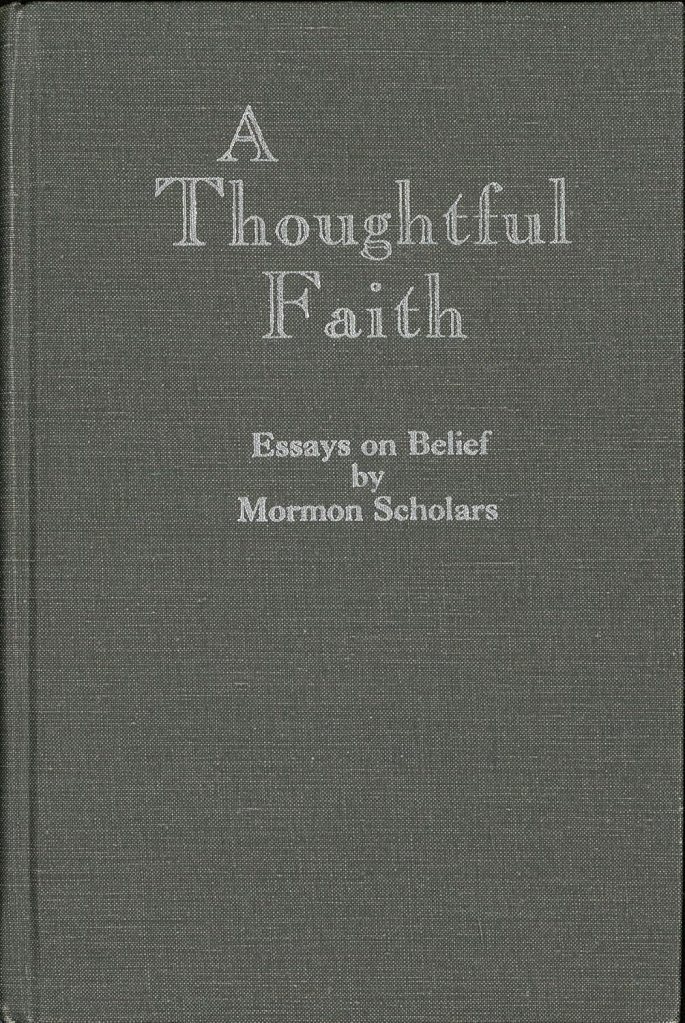
Instead of a Gospel with black-and-white answers, I found myself confronted with a Gospel that could be ambiguous, with shades of grey, and some questions that simply had no answer. I learned that I would have to grow my faith in this new paradigm on my own. One of the books that was a real lifesaver for me at this time was a collection of essays compiled by Philip Barlow, A Thoughtful Faith: Essays on Belief by Mormon Scholars. Here, I found some of the greatest thinkers in Mormonism who faced doubts yet chose to believe.
I can honestly say I came out of this experience with a stronger faith than before. My mantra became Don’t let what you don’t know get in the way of what you do know. I gave myself permission to shelve some doubts, and I am no longer shocked (though I may still be frustrated or angry) when I see faults in leaders or the church institution. The idea that God allows the church and its leaders to make mistakes is my new paradigm. I try to offer grace to the Church in the same way that Christ offers grace to me, an imperfect mortal that I am.
As I reflect on my life, I recognize that I was not the most likely candidate to be an active member of the Church of Jesus Christ of Latter-day Saints. In fact, I have had many reasons not to stay, as I have seen my siblings and many friends leave the Church. I can’t speak for others — only that it continues to feel right for me in both my heart and my mind. This isn’t to say my choice to stay is more valid than another’s, but I feel certain that this is where I belong. The Church has always felt like home to me. I have never forgotten my Aunt Carolyn’s words after returning to the Church after a long absence. Walking into sacrament meeting in her LDS ward, she said, ”I felt like I had come home again.”
There are many reasons I take pride in The Church of Jesus Christ of Latter-day Saints. The Church — its institution and its people — has loved me and befriended me. I am part of a community that gives me countless opportunities to stretch my faith and confidence. And that community can be found across the globe. One of my best friends recently returned from a mission to Ghana, Africa. In Ghana, he and his wife used the Church’s Pathways program to help impoverished people get an education. I also love the ethos of service in the church. Anyone who needs help moving, laying sod, or food for a family experiencing a crisis, large or small, will find ward members en masse ready and willing to help. Yes, there is room for criticism of the Church. Recently, I discovered some Church news that made me so angry that I walked out of Sunday School and paced the halls of the meetinghouse to avoid letting out a scream that would have sent the members running for the exits. However, the good that the Church does, in my mind, far outweighs its shortcomings.
I haven’t had dramatic spiritual manifestations — but I have an overwhelming body of small witnesses. I rarely leave a Sunday service without being strengthened or uplifted in some way. Although some leaders and fellow members disappoint me, sometimes grievously, I still have faith in the Church’s general direction. I have many questions about Church doctrine and policy that I struggle to answer. However, I have learned to separate the foibles of fallible leaders in the institutional church from the Gospel. I try not to confuse the Church with the Gospel.
After 57 years, I have learned to live with life’s contradictions and ambiguities. The church that I love has angered me, disappointed me, hurt people dear to me, and caused me to doubt things I held true. Yet, the Church is still my home, and the Spirit has confirmed that to me time and time again. Many people I love have chosen another path. I respect their choices. Every faith journey is personal to the traveler. This is my journey, and the way I have come to make meaning of my life. I feel as Joseph Smith, “If I esteem mankind to be in error, shall I bear them down? No! I will lift them up — and in his own way if I cannot persuade him my way is better. I will ask no man to believe as I do.”


Leave a comment