Two definitions for the word “publish.”
- To prepare and issue (a book, journal, piece of music, etc.) for public sale, distribution, or readership.
- To make publicly known; announce, proclaim, divulge, or promulgate.
I teach my writing students that there are two kinds of publishing, and neither is more important than the other. It is wonderful to publish a book or get published in a journal or magazine, but some of your best writing may not get recognized by the world. Sometimes, your most important writing may only be “published” to family and friends. The work you share with those you love (poems, letters, notes, emails, journals, family histories, etc.) can change lives.
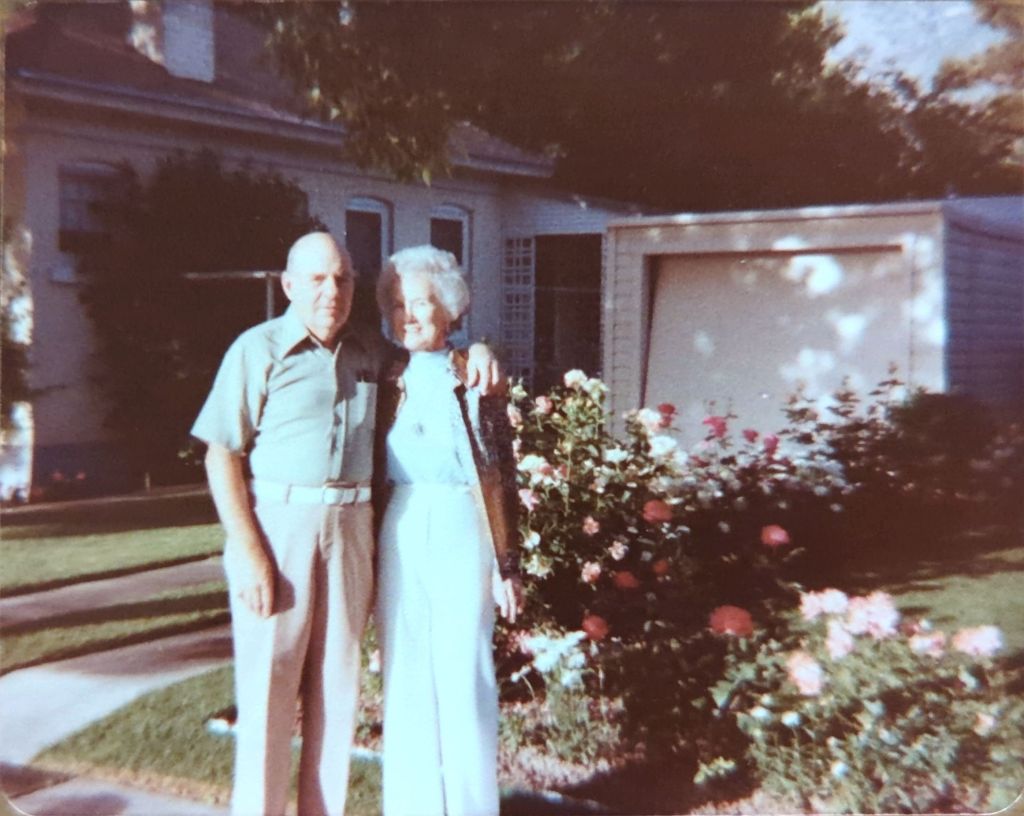
I wrote the following personal essay, “Grass,” as a tribute to my maternal grandparents, Morris and Virginia Duke. They had a modest home on the corner of 500 East and 100 South in Provo, Utah–just kiddie corner from the old Maeser Elementary. When I was a student at BYU, my grandparents invited me to be caretaker for their immaculate yard. Though the essay has never been published in a journal or magazine, it has been read by nearly every member of my family: my grandmother, aunts and uncles, cousins, and so on. My grandmother asked me to read it at my grandfather’s funeral, and my mother and her siblings asked me to read it at my grandmother’s funeral. I still get requests 30 years later to send a copy to various family members. I do not say any of this to boast. I say it to let everyone know that your words matter and “publishing” your writing, by either definition, can make a difference. Hope you enjoy it.
Grass
“They are alive and well somewhere, /The smallest sprout shows there’s really no death.”
—WALT WHITMAN (from Leaves of Grass)
It is December and bitter cold outside when I pull up to my grandparents’ house. Once out of the car, my hands search instinctively for the snug shelter of coat pockets. The ash and sycamore trees, two giants whose armor of leaves protects the house from summer sun, are bare now, letting the wind whistle through their branches without resistance. Icicles dangle from the rooftop, their crystal fingers almost stretching to the piles of snow beneath. There is little to invite one to stay outside now. Summer is forgotten, and Nature has silenced all of autumn’s arguments with a smothering layer of snowfall. The house beckons me with a warm yellow light and the promise of hot food, hopefully, apple pie buried in vanilla ice cream. I see the heads of relatives gliding past the small square window in the side porch door. Yet, for reasons inexplicable, I remain outside an extra moment trying to fool my freezing body with thoughts of summertime, the heat, and the grass. Before long, I see my grandmother peering out the window, like a picture framed, her hair whiter than the drifts at my feet. She’s spotted me, and I must go in. However, on the way up the porch steps, I take a moment to glance behind and in a firefly’s flash, I spy green from the corner of my eye, and it’s summer again, and I know, somewhere, in the darkest corner of the boxcar garage, the mower is waiting.
It’s a ritual. In late April or early May, while most people look for signs of spring, my grandmother watches the grass. The instant an overambitious blade of grass dares to poke its head a centimeter above its fellows, I can expect a call drawing me out of semi-retirement to once again do battle with the lawn. And this is no ordinary lawn. The yard is my grandparents’ masterpiece, an adopted sixth child that they would never admit their attachment to, but one that everyone in the family is aware of. The rosebushes are merely a set of extra grandchildren and great-grandchildren. Receiving community awards like “Best Kept Lawn in the Neighborhood” has only heightened my grandparents’ desire to be satisfied with nothing short of Eden. They have lived in this house for 50 years now, and though there are yet to be any sightings, I am certain Eve is hiding in the ferns there, somewhere. . .
It all started for me one dewy spring morning ten years ago, when my grandfather, seeing age and failing health on the horizon, took me aside to offer me the job of caretaker for the lawn. I was naive and probably a little bratty at the time. I really didn’t need another job; pushing carts at the grocery store was keeping me busy enough. In addition, it was the summer before my freshman year at the university. Prospects of girls and golf rated much higher in my estimation than a proposed weekly appointment with the grass. Besides, I was sure they knew the severity of my hay fever around cut grass. Why me? However, with the idea that this would be a short-term arrangement and the familial obligation, I figured I couldn’t say no to the people who forged my mother, and, as a result, me. No big deal. Two hours a week–snip, snip, snip–and I was out of there. Presto–everyone was happy. A painless procedure… or so I thought.
I had mowed lawns before at home under threat, where “getting it done” was the thing, and the “how” never entered my mind–until now. Beginning with a base bribe to ensure interest and faithfulness, my grandpa soon began tutoring the apprentice in the fine art of edging and mowing the lawn until he felt me worthy to handle the reins completely. Little did I know how reluctantly my grandfather gave up the job. For much of my childhood, I had only known my grandfather from a distance through terse conversations mediated by others. I wasn’t afraid of him; on more than one occasion, he had driven the entire dinner table into fits of laughter with his colored rendition of the French national anthem, anti-Nazi propaganda songs, and other such oddities. However, I had never seen him vulnerable in any way. Now I was seeing a new side of him. As a result of health problems, I now watched him, one by one, relinquish chores that he had managed all his life. It was frustrating for him, making the transition from caregiver to receiver, but the lawn was special, almost a symbol of his manhood, and it wasn=t until later that I recognized the gravity of his sacrifice. Though he didn’t say it, giving me the lawn was the equivalent of entrusting me with one of his children.
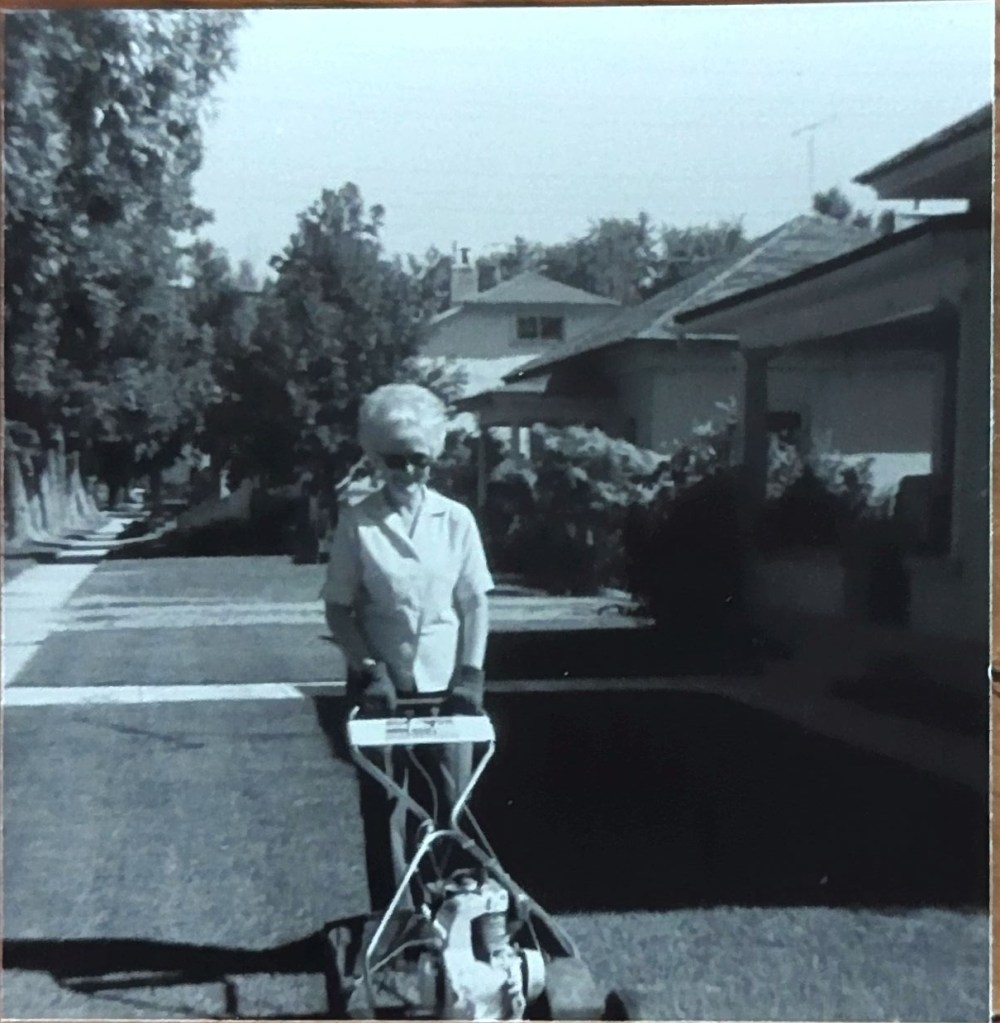
Yet, as a newly empowered foster parent, I was hardly left alone. These parents had visiting rights and demanded perfection from their offspring. And it wasn’t long before my ears were filled with a series of tutorials. “Edging a lawn is like framing a picture,” my grandmother began, with the earnestness of a sage. Each day, I received new bits of wisdom, entailing everything from the perfect mower height to the length of the blade on the gas-powered edger. Among my discoveries was the fact that dandelions were not the lovely golden flowers that I thought them to be (after all, we harvested them at my home), but mortal enemies of the distinguished yard. Each day was a new education, and even after I felt I had mastered my trade, my work was never finished without Grandma’s approval. On more than one occasion, when foolishly considering myself done, I awoke from my stupor only to hear in that dangerously sweet voice, “Did you remember to clean out the ditch?” or “I think you missed a spot over there.” Steaming inside, but with enough love not to show it, I gritted my teeth and marched out to finish my duties.
Ten years later, the routine is clockwork to me. There are things I have come to expect with each visit, like Grandma’s exaggeration of the lawn’s growth. Inevitably, Grandma brags at the beginning of each visit about how tall the grass has grown, especially if I’ve arrived a day or two late for the job–by then, in her mind, it’s sheer jungle out there. And I must confess, I often challenge her boast, not because she’s wrong, mind you, but more out of consideration for my underachieving lawn at home. I will say things like, “Well, I’ve seen it longer,” and “You should see the lawn at home,” just in hopes of dashing her unabashed arrogance. Of course, it never fazes her. It is her Eden after all. Yet, I was not nearly so impressed when I discovered they were cheating on me. It took me a year to discover–on an unscheduled visit–that, behind my back, they had some guys coming, juicing up the lawn with fertilizer just to make me work harder.
The job begins as I cautiously back out their white Olds from the prehistoric half-garage along a narrow bowling-alley-like driveway. Next, I fetch the tin garbage can behind the garage while trying to avoid the thorns of the climbing roses that have overgrown the trellis. With a tug of the cord and the hum of the engine, I am then prepared to mow my parallel strips, careful not to destroy the yard’s equilibrium with its trimmed hedges, towering shade trees, and carefully plotted flower arrangements. Against practical wisdom, I still mow barefoot, not wanting any separation between me and the lawn. To me, it would be like a sculptor using gloves. The mowing finished, I moved on to the more precise science of edging the grass. With the eye of a draftsman, I edge my straight lines along the six sections of grass outlined by the sidewalk. I save the best for last–the manly weedeater. No longer the careful craftsman, with a booming buzz, I start spitting out grass with abandon. Finally, I check the ditches for blockage, spray off the walks, and lastly, wheel out the grass to the street in the big black garbage can for trash pickup day.
There have been times when the temptation to skimp on effort reveals itself in a corner I might cut or a spot where I might skip edging. After all, they seldom come out to inspect my work anymore. Grandpa only occasionally creeps to the porch for a token glance at the yard and a quick compliment, but often he is too ill to get up, and like Moses of old, can only imagine the promised land resting on the other side of those walls as well as the walls of his life. Grandma’s eyes aren’t what they used to be, either. However, in that same instant I consider slacking, I remember the trust placed in me.
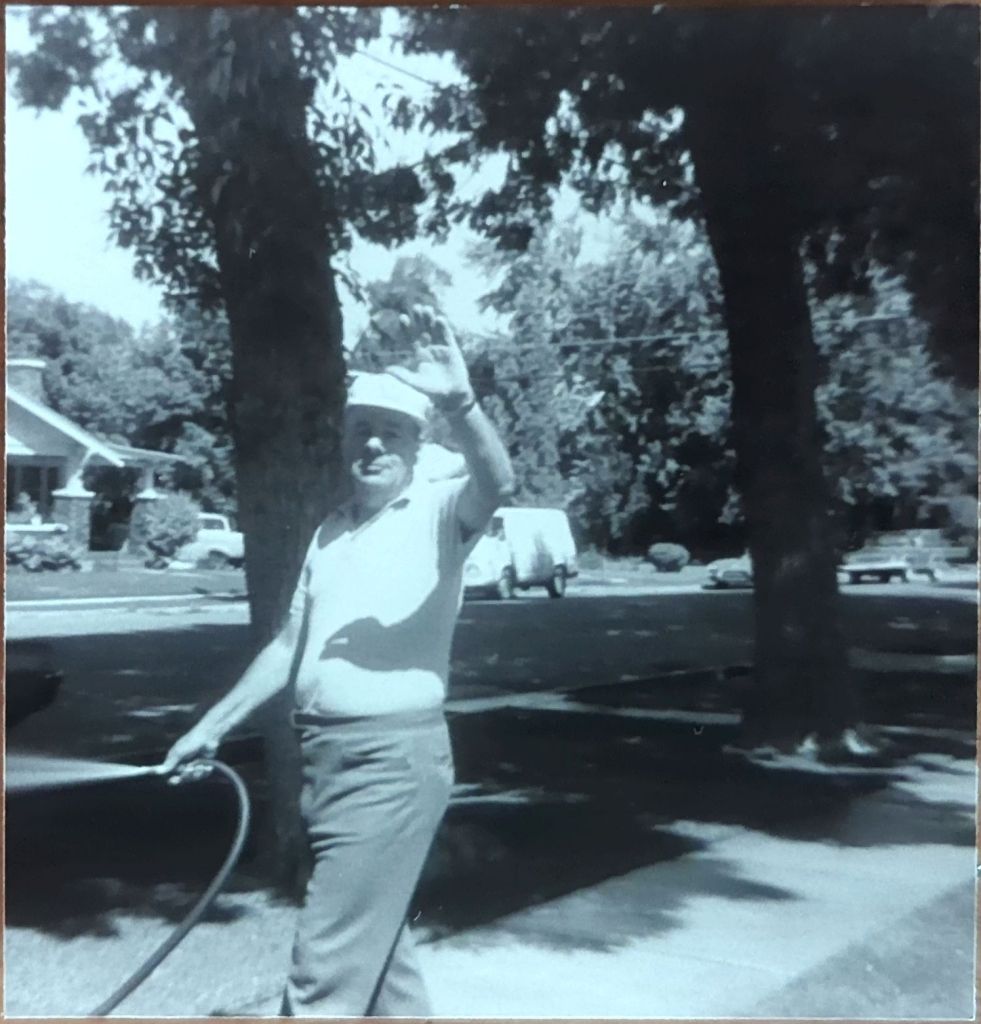
The final act I perform on the lawn isn’t a required one. Spraying the walks is a gift. A gift for what? That I can’t say for sure. I just did it one day, and the delight on Grandma’s face indicated its necessity. As I said earlier, I didn’t and don’t need the job. Is it for all the lunches we would have never had together? Is it for all the stories I would have never heard? Or is it just for sitting at their feet on the porch at summer twilight, silently looking out at the grandeur of it all? Whatever the reason, somehow the day is never complete until the sidewalks have been sprayed to look like they were caught in a summer downpour. Before turning off the water completely, in celebration, I launch the water high into the air, creating a waterfall, its rainbows glistening in the sun, for me to drench myself in. Grandma laughs heartily, and with a tinge of envy, I believe, for what may have been a childish pleasure of her own before sophistication set in. Finally, I return everything precisely to its place and prepare to leave, always satisfied in a rare, measurable accomplishment. Then comes the crowning gesture. Just before hopping into my car, I look for the face and the wave. My eyes travel up the narrow walkway to the green artificial turf porch through the screen to the small square frame in the upper part of the door, and there is Grandma. I do not remember a time in all the years of cutting the grass where I didn’t see that face framed in the window–an angel’s face crowned in white, sending me off like a heavenly parent that waits patiently for my return.
I look back at the door, and there she is again on this winter’s night. There will come a time when my duty will end. On a summer’s day, years from now, in one of my hay fever fits, I will sneeze especially hard on an extra grassy day, and I will look around for acknowledgment that will not be there. I will be listening for an exclamation from Grandma around the corner, “Bless you!” or a chuckling grandpa, “Is your head still attached?!”, and only silence. Yes, my grandparents will pass on like summer passes to fall. The house will be sold, weeds will inevitably grow up, and the new owners will care nothing for the former meticulous care given to this Eden. I will drive by, drowning in too many memories to remain. One day, I too, will have a family, and perhaps my son will question why it is necessary to edge the lawn, considering mowing sufficient, as I once questioned my grandparents. I will patiently pause, and from a well deep within me I will respond with my grandmother’s words, “Son, edging a lawn is like framing a picture. . .”
 My Song of Myself
Leave a comment